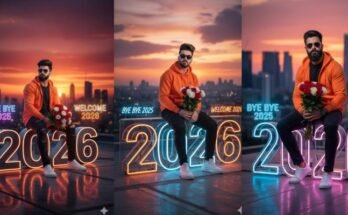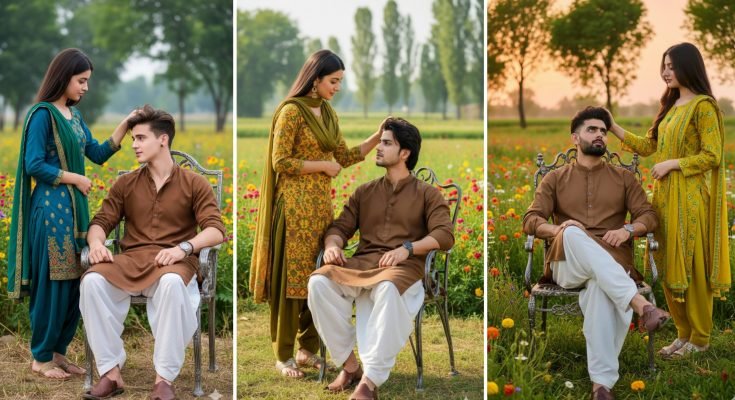
Scroll through Pinterest, TikTok, or Instagram Reels lately, and you’ll likely stumble across a wave of dreamy, cinematic portraits: a couple in a sun-drenched village, a guy leaning against a sports car under neon city lights, every frame looking like it belongs in a fashion editorial rather than a random phone gallery. Behind almost all of them sits the same tool: Google’s Gemini image generator, paired with a very specific style of prompt that people online have started calling the “AI girlfriend” trend.
It’s a catchy label, but it’s worth being precise about what’s actually happening here. Gemini isn’t a companionship app, and Google hasn’t launched a “virtual girlfriend” product. What people are really doing is feeding Gemini detailed, story-driven image prompts often built around a real reference photo to generate romantic, aesthetic scenes featuring themselves and an AI-imagined partner. The “girlfriend” part is creative framing, not a built-in feature.
That distinction matters if you want to understand the trend well enough to use it yourself, so let’s break down what’s really going on.
What People Mean by “AI Girlfriend Prompts”
At its core, this trend is about AI image prompt engineering: writing text instructions detailed enough that an image model like Gemini can render a specific mood, setting, wardrobe, and pose. The “girlfriend” or “boyfriend” element comes from the scenario the user describes: two people in a romantic or intimate-feeling setting, styled like a movie still.
These prompts tend to share a few ingredients:
- A reference face: many users upload their own photo so Gemini keeps facial features consistent across generations.
- A detailed setting: a village courtyard, a night-lit city bridge, a rooftop, a beach at golden hour.
- Specific outfits and accessories down to the fabric, color, and brand-style details, since vague clothing descriptions produce generic results.
- Body language and framing instructions: where hands are placed, camera angle, whether it’s a close-up portrait or a full-body shot.
- Lighting and photography terms: phrases like “cinematic 35mm,” “golden hour,” or “HDR contrast” that push the model toward a specific visual style rather than a flat, AI-generated look.
None of this requires special access or a paid companionship service. It’s simply thoughtful prompt writing applied to a mainstream AI image tool.
Why This Trend Took Off
A few things are converging to make this format so shareable right now.
People Want to See Themselves in a Story
Generic AI art has been around for years, but it rarely felt personal. Once tools let users upload their own face and place it inside a fully imagined scene a village romance, a luxury car shoot, a cinematic street style moment the content stopped feeling like a random image and started feeling like a personal fantasy someone could actually picture living out. That emotional pull is a big part of why these posts get saved and shared.
Prompt Templates Are Now Copy-and-Paste Friendly
Early AI art required real trial and error to get believable results. Today, entire communities trade ready-made prompt templates. Someone finds a formula that produces sharp, realistic skin tones and consistent facial structure, shares the exact wording, and thousands of people reuse it with their own reference photo. That’s a major reason the same visual style soft glowing lighting, cinematic portrait framing, culturally specific outfits like a shalwar kameez or a Punjabi suit shows up across so many unrelated accounts.
The Results Actually Look Convincing
Earlier AI-generated people often had the tell-tale waxy skin, mismatched lighting, or six-fingered hands. Gemini’s newer image models handle skin texture, fabric folds, and lighting far more convincingly, which is exactly why “ultra-realistic” has become one of the most common words baked into these prompts. The more believable the output, the more people want to try it for themselves.
How to Write a Prompt That Actually Works
If you want to try this style yourself, the difference between a flat result and a genuinely cinematic one usually comes down to specificity. A few practical tips:
- Anchor the face first. Upload a clear, well-lit reference photo and explicitly ask the model to preserve the original facial structure rather than “beautifying” it; otherwise, you’ll often get a face that barely resembles the reference.
- Describe the scene like a film director, not a caption writer. Instead of “a nice garden,” try “a courtyard shaded by mango trees, late afternoon light, dust visible in the air.” The more sensory detail you give, the less the model has to guess.
- Nail down wardrobe details. Color, fabric type, regional style, and accessories (a specific watch, sandal style, or dupatta drape) all steer the output away from generic stock-photo clothing.
- Give camera direction. Mentioning “35mm portrait lens,” “full-body shot,” or “shot from a low angle” changes composition in ways a vague prompt never will.
- State what you don’t want. Adding lines like “no text, no watermark, no distorted hands” heads off common AI artifacts before they happen.
The Technology Behind the Realism
None of this works without real advances under the hood. Gemini’s image generation draws on large multimodal models trained to connect text, images, and context in a single system, meaning it isn’t just matching keywords to stock photo styles; it’s interpreting the relationship between a described pose, a described outfit, and a described setting all at once.
That multimodal training is also why reference-photo consistency has improved so much. The model can hold onto facial structure across multiple generations instead of producing a new, unrelated face every time you regenerate the image. Add in stronger lighting and texture rendering, and you get the polished, editorial look that’s fueling this whole trend.
It’s worth noting this is general-purpose image generation technology, not a companionship feature. The same underlying model that renders a “romantic village scene” prompt is rendering product photos, landscape art, and marketing visuals for millions of other users. The “girlfriend” framing is entirely a product of how creative the prompt is, not a special mode Google built for relationships.
Is This Trend Worth Trying?
If you’re curious about AI image generation and enjoy creative prompt writing, there’s nothing inherently wrong with experimenting; it’s a genuinely useful way to learn how detailed, well-structured prompts change output quality. A few sensible habits are worth keeping in mind, though:
- Be thoughtful before uploading personal photos to any AI tool, and check what the platform does with uploaded images.
- Treat these as fictional, stylized scenes rather than a substitute for real relationships or emotional support; a generated image can’t reciprocate a conversation the way an actual person can.
- If a version of a prompt or platform claims to remember your personal history and simulate an ongoing “relationship,” treat that marketing claim with healthy skepticism rather than assuming it’s an official product capability.
At the end of the day, this trend says less about Gemini being an “AI girlfriend platform” and more about how far prompt engineering has come. Learn the structure, reference photo, detailed setting, specific wardrobe, and clear camera direction, and you can apply the same technique to travel photography concepts, fashion editorials, or any other cinematic scene you want to bring to life.